
Lubbock Garage Door Guide
Why Lubbock Garage Doors Fail on the Coldest Mornings
Lubbock's 1960s-70s housing stock and cold winter mornings put real strain on original torsion springs. Here's what to check before one breaks on you.
- Licensed & Insured
- Same-Area Service Calls
- Upfront Pricing
The Problem
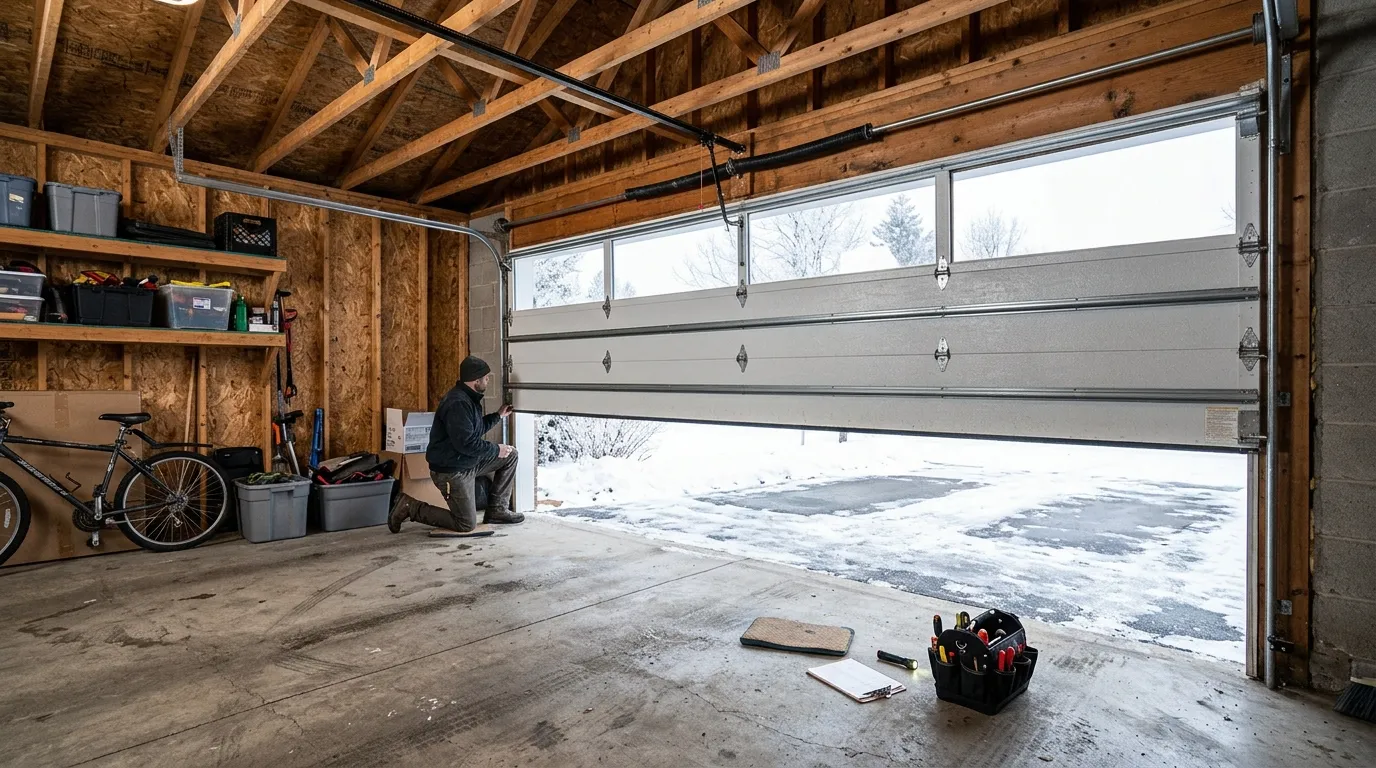
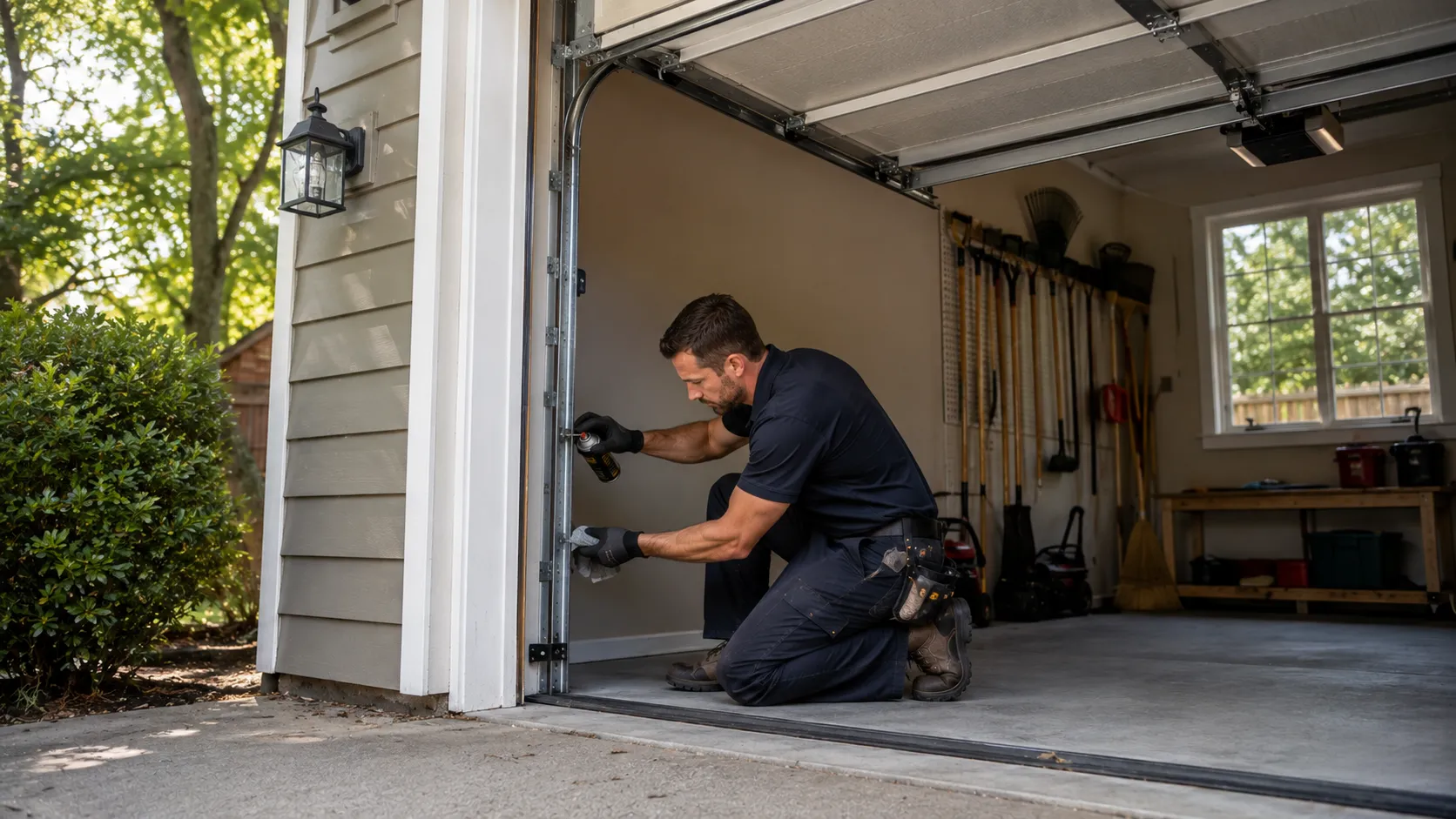
Most of Lubbock's housing went up between 1963 and 2003, with the median build year landing around 1967. That means a lot of the doors on this side of town are still running on torsion springs sized and installed decades ago, sometimes the original hardware. Steel spring wire has a service life measured in cycles, not years, but age still matters because older springs were often wound to specs that don't account for how cold steel behaves.
A spring that's been fine for forty winters can snap on the forty-first, and it tends to happen on the coldest morning of the year, not a mild one. That's not bad luck. It's metal fatigue meeting temperature at the same time.
If your house falls in that 1960s-70s build window - which covers a lot of Lubbock - the spring under strain right now is older than most of the cars in the driveway.
What Local Conditions Do
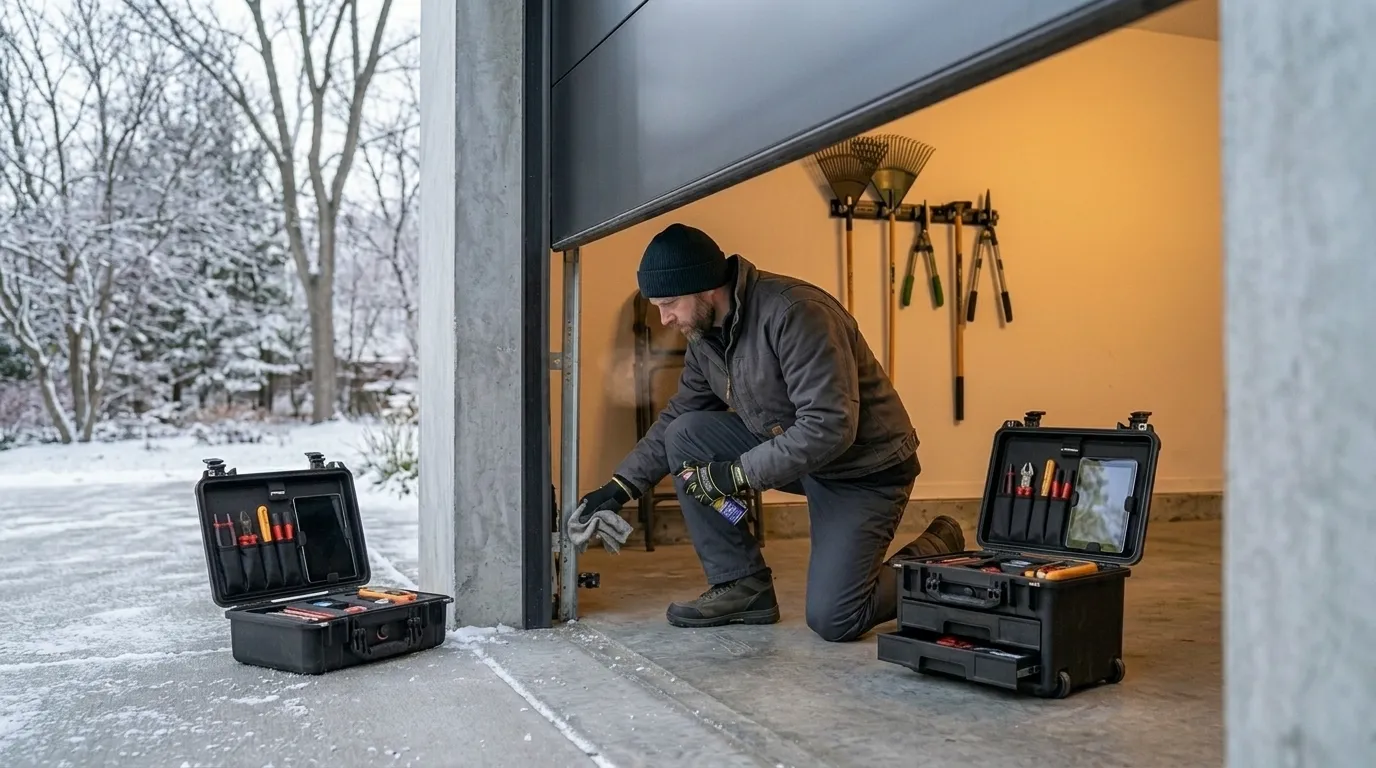
Lubbock sits in a cold-moderate climate band, which means winter mornings regularly drop cold enough to stiffen steel before the sun's been up an hour. Cold steel is less elastic. A torsion spring that flexes smoothly at 70 degrees resists more and cycles rougher at 30, and that added resistance shows up as extra load on the same coils, day after day, all winter.
It's not a dramatic swing like a hard freeze event - it's the ordinary daily cold of a Lubbock winter working on a spring that's already logged years of cycles. Doors on houses from that 1960s-70s stock feel this first, because the spring itself is older and the tension was set for conditions decades back. The failure point isn't usually the coldest week of the year.
It's whichever cold morning happens to be the one where the spring finally runs out of flex.
The Common Mistake
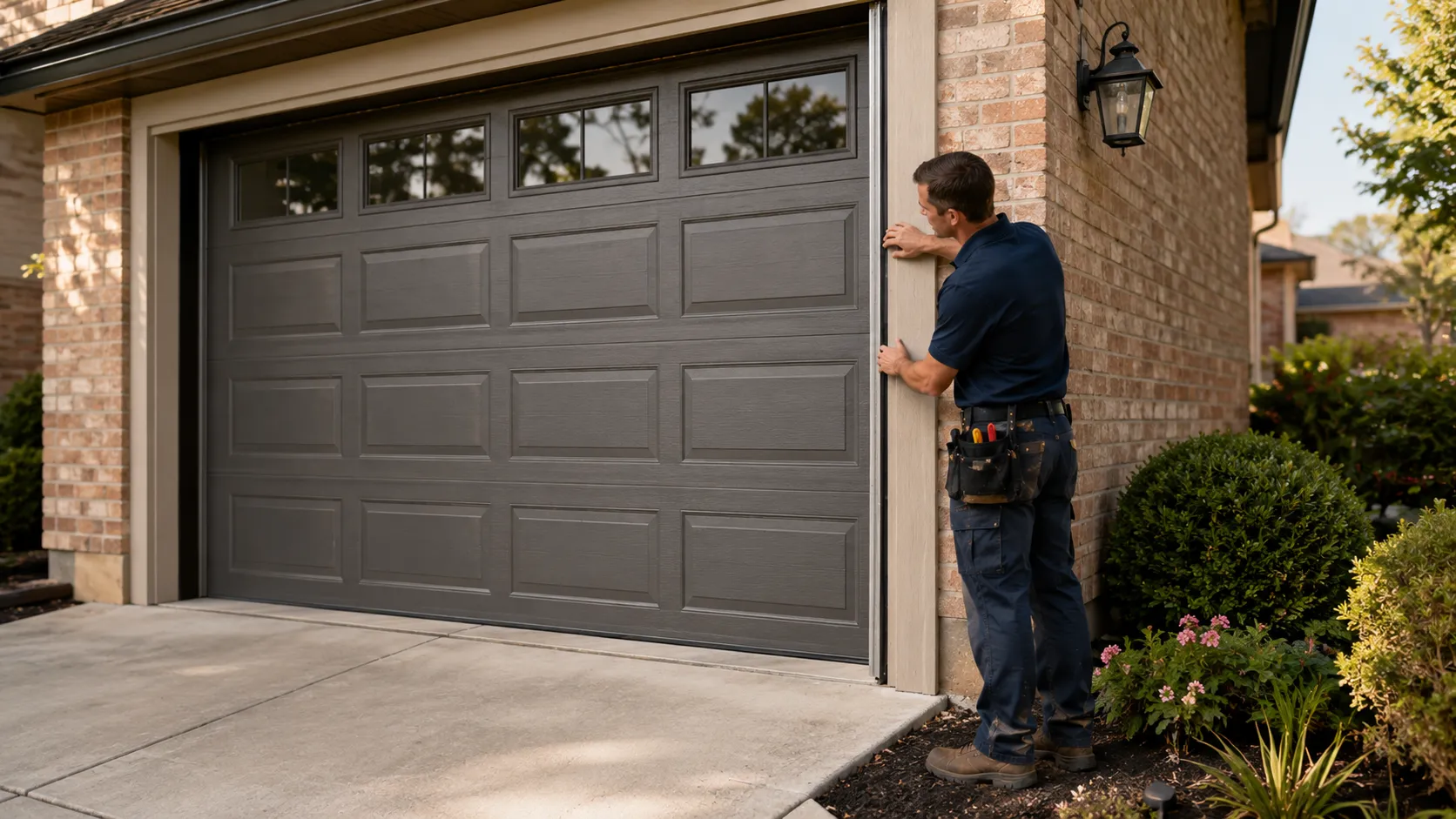
The mistake most homeowners make is waiting for the spring to look worn before doing anything - a visible gap in a coil, obvious rust, a door that's clearly sagging. Torsion springs don't usually give you that warning. They hold tension right up until they don't, and a cold morning is often the trigger that finishes off a spring that was already near the end of its cycle life.
With 3,838 owner-occupied houses in the service area and most of that stock dating to the 1960s and 70s, there's a real number of springs out there that have quietly outlived their working life and are just waiting for a cold snap. At a median household income of $76,850, replacing a spring before it breaks is well within reach for most Lubbock homeowners - the cost isn't the barrier, the assumption that it'll keep working is.
What to Check
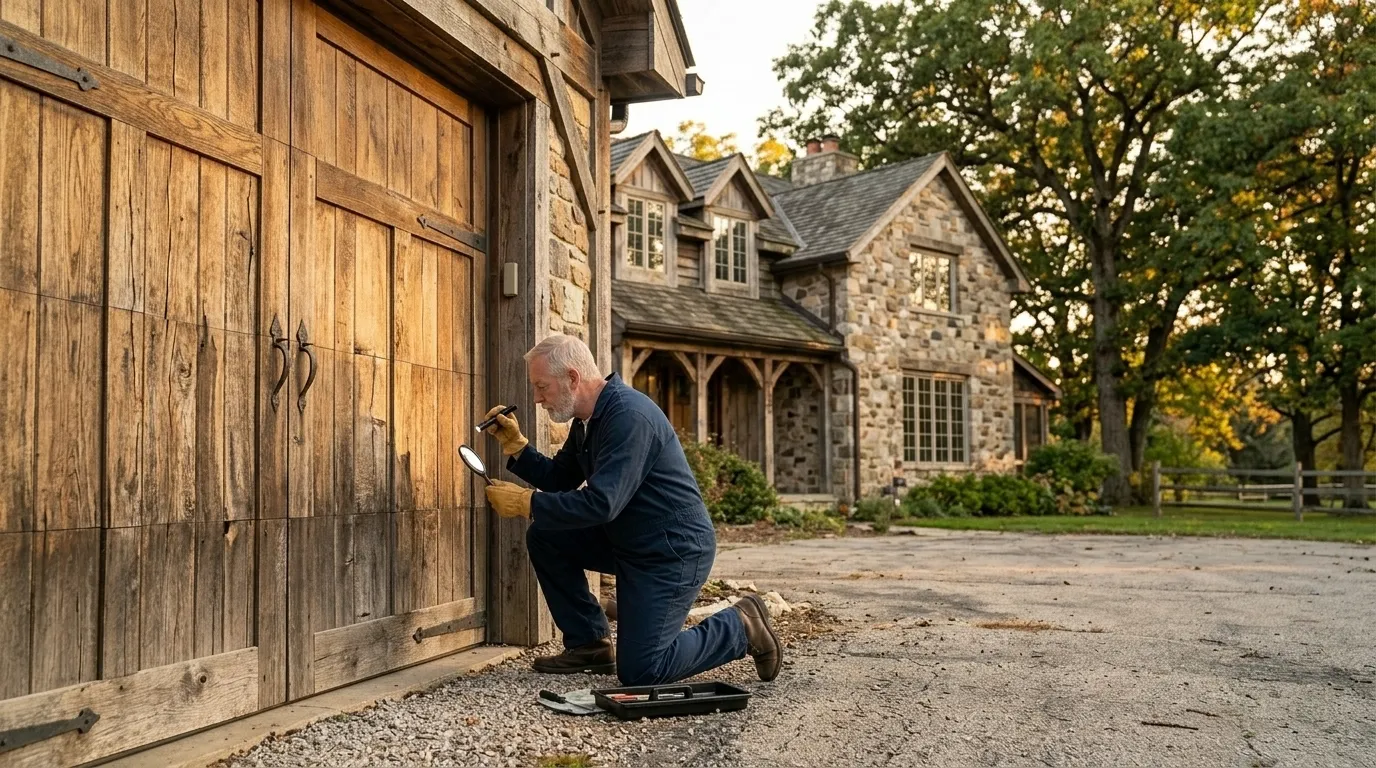
Look at the spring itself, not just the door's behavior. Check for a visible gap between coils when the door is closed, rust concentrated on one section rather than spread evenly, or a spring that looks stretched compared to its resting shape in the manual. If your house was built in that 1963-2003 window and the spring has never been replaced, treat that as useful information on its own.
I'll be straight about the limit here: I can't tell you a spring's exact remaining life from a visual check alone, and I won't guess a number just to sound precise. What I can do is look at the coil, the winding, and the date if it's marked, and tell you honestly whether it's a candidate for this winter or has real life left. That's a five-minute look, not a guessing game.
How We Can Help
Garage Door Repair
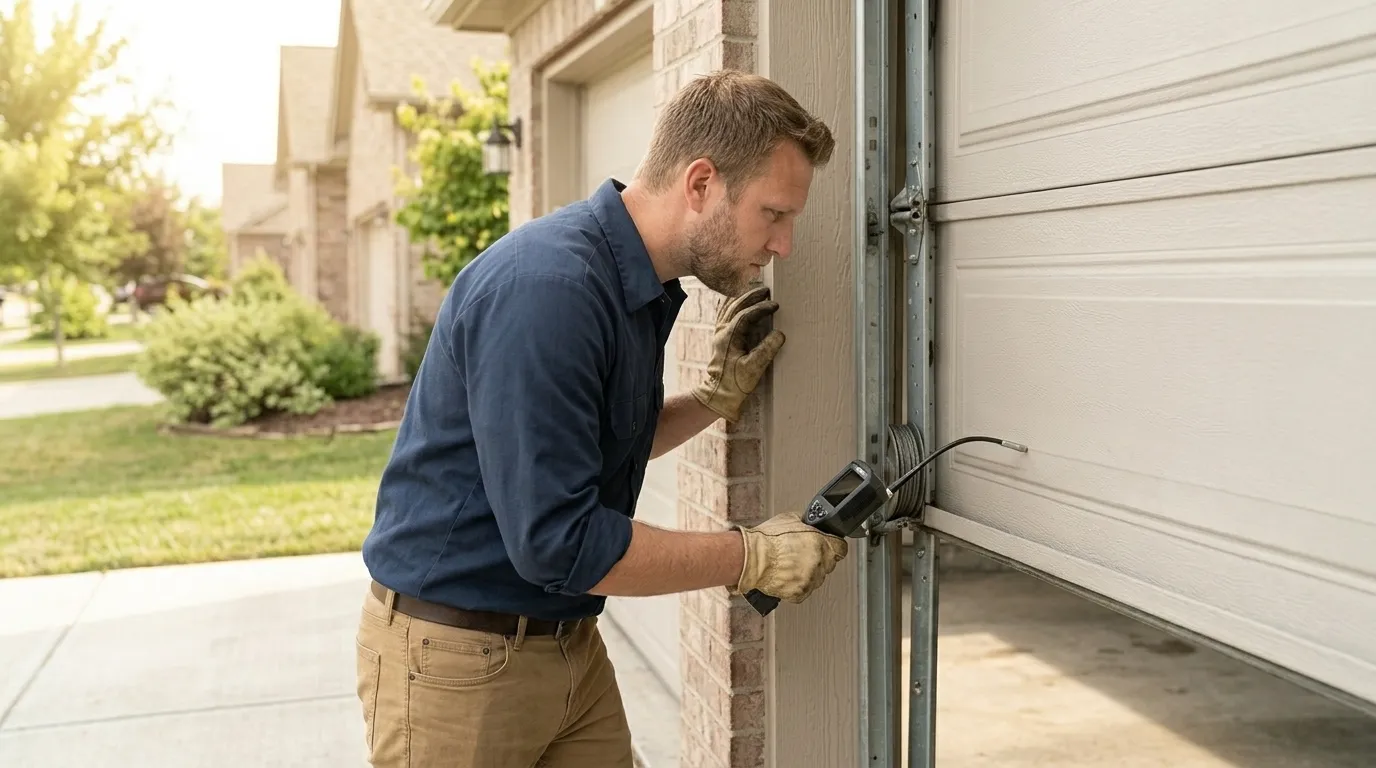
Springs, cables, tracks, rollers, and openers fixed by a tech who explains the problem before touching anything.
Learn more →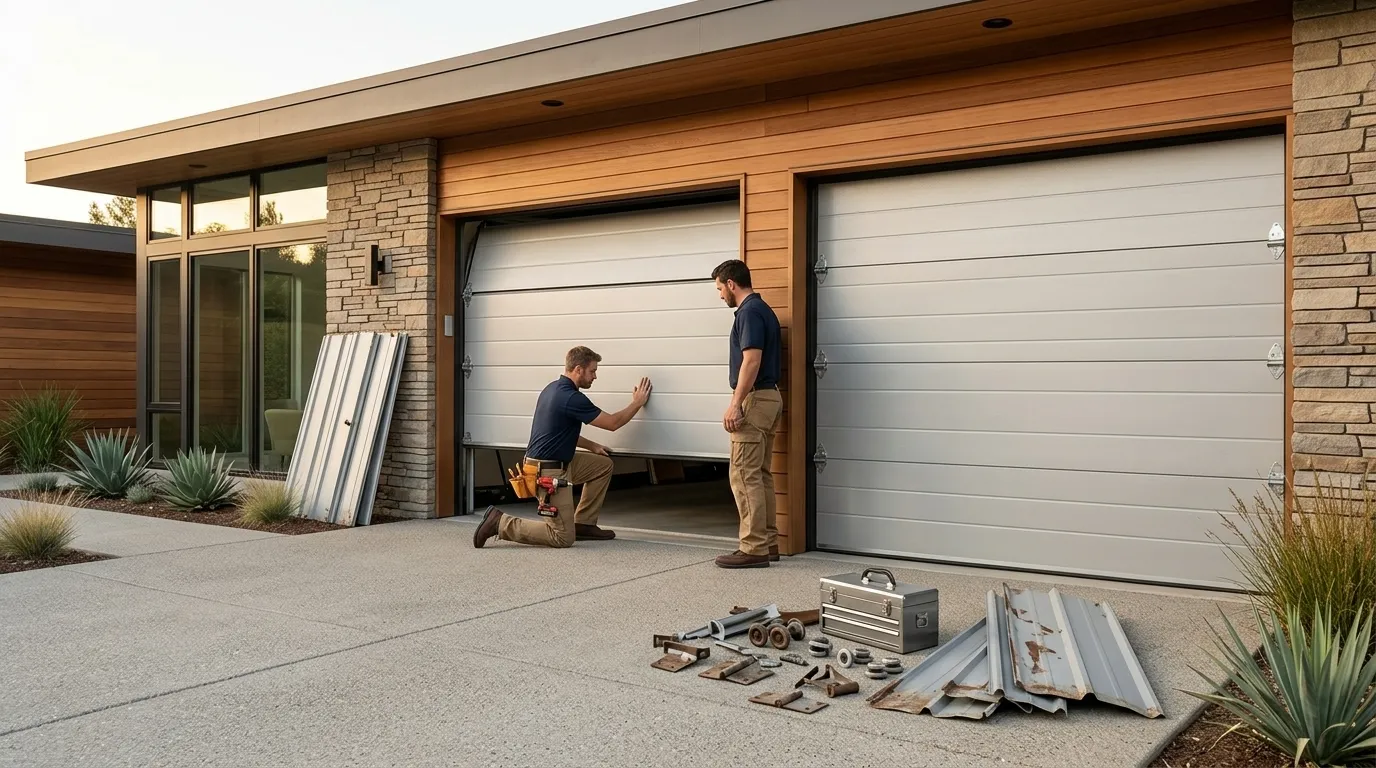
Garage Door Installation
New sectional doors sized and installed for the housing stock actually built in this area.
Learn more →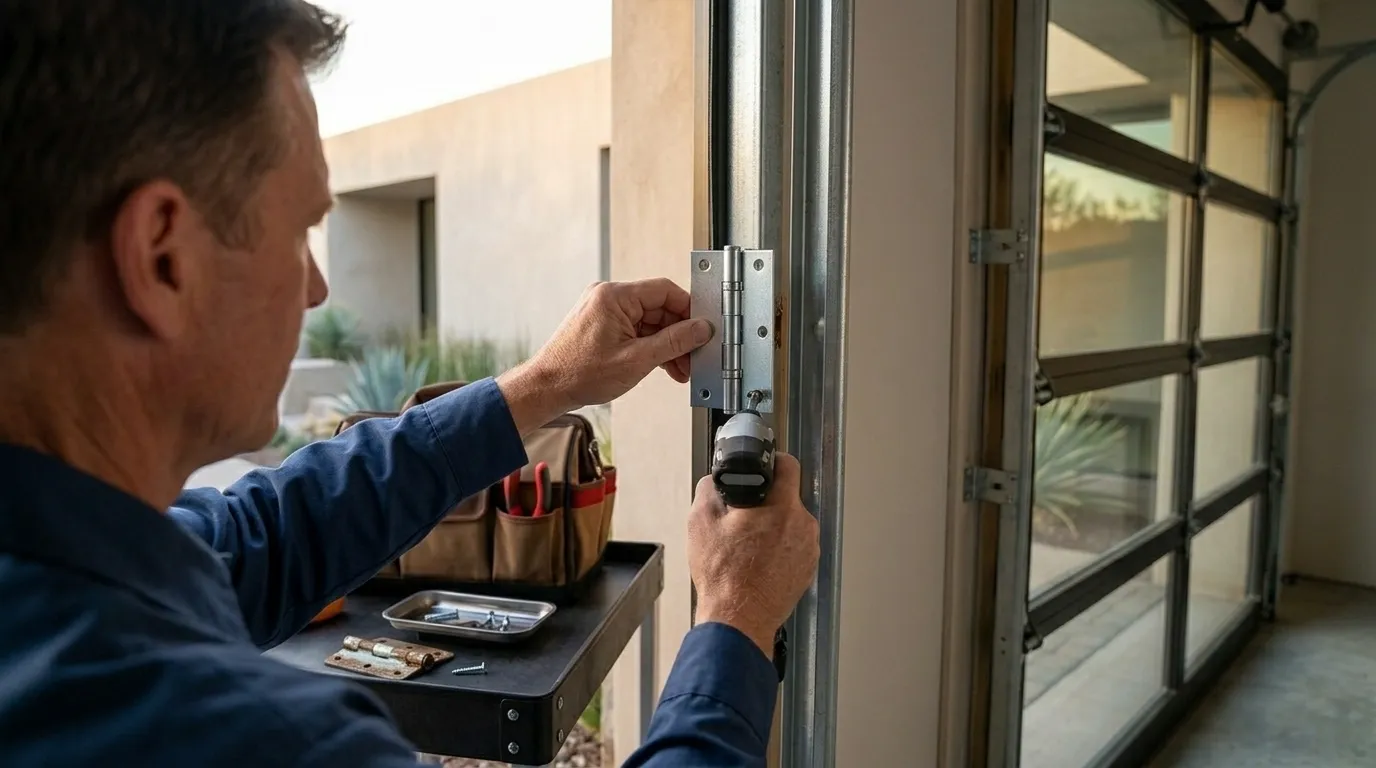
Garage Door Service
Tune-ups, lubrication, and safety checks that catch a small problem before it becomes a service call.
Learn more →Frequently Asked Questions
How old does a garage door spring have to be before it's a risk?
Age alone doesn't tell the whole story - cycle count matters more. But if your house dates to Lubbock's common 1960s-70s build era and the spring has never been swapped, it's carried a lot of winters already. Worth a visual check before the next cold snap rather than after it breaks.
Why does my spring always seem to break in winter?
Cold steel flexes less than warm steel. In Lubbock's cold-moderate climate, a spring that's already near the end of its life meets extra resistance on cold mornings, and that's usually what pushes it past the breaking point rather than some sudden event.
Is it cheaper to replace both springs at once?
I don't have a set price to quote here, but when one spring on a double door has failed from age, the other one from the same install has logged the same cycles and the same winters. Replacing just the broken one often means a second call within a year or two.
Can I just tighten or adjust an old spring instead of replacing it?
No. Torsion springs aren't adjustable for wear - they're wound to a set tension for a given door weight. Once the coil metal has fatigued, tightening does nothing for the underlying fatigue and it's not a safe thing to attempt without the right bars and training.
Get Started
Have a Door That Needs a Second Opinion?
Call and describe what it is doing - we will tell you what it likely is.